
We Produce Energy From Renewable Sources.
PROJECTS
01. PITCOX
One of the key criticisms of renewable energy is the inability to store it once produced. Wasted wind power added an estimated £40 onto the average electricity household bill in the UK in 2023, and this is estimated to increase to £150 by 2026 (BBC, December 2023). This is because wind generators are paid to switch off their turbines, and gas-powered station are paid to fire up, with this cost passed onto consumers.

Example of a BESS Energy System
– Wärtsilä
Requirement for Pitcox
The proposed BESS will go some way to addressing the issue of renewable energy and its inability to store the energy once produced. The power will be charged while renewable sources are generating and discharged when demand is high.
A number of large-scale renewable energy projects are connecting into the Dunbar substation, highlighting the requirement for BESS in this location.
Location Plans
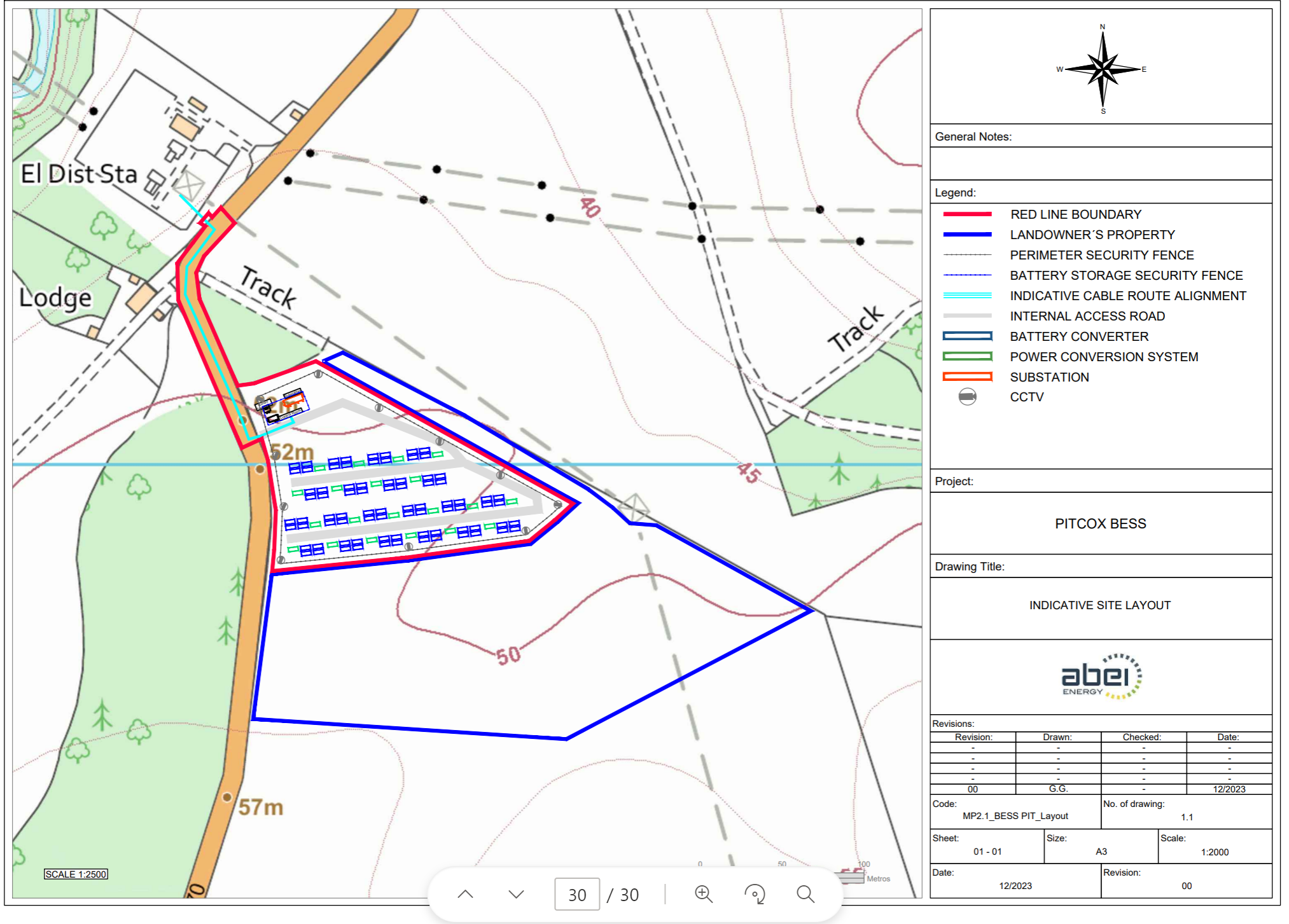
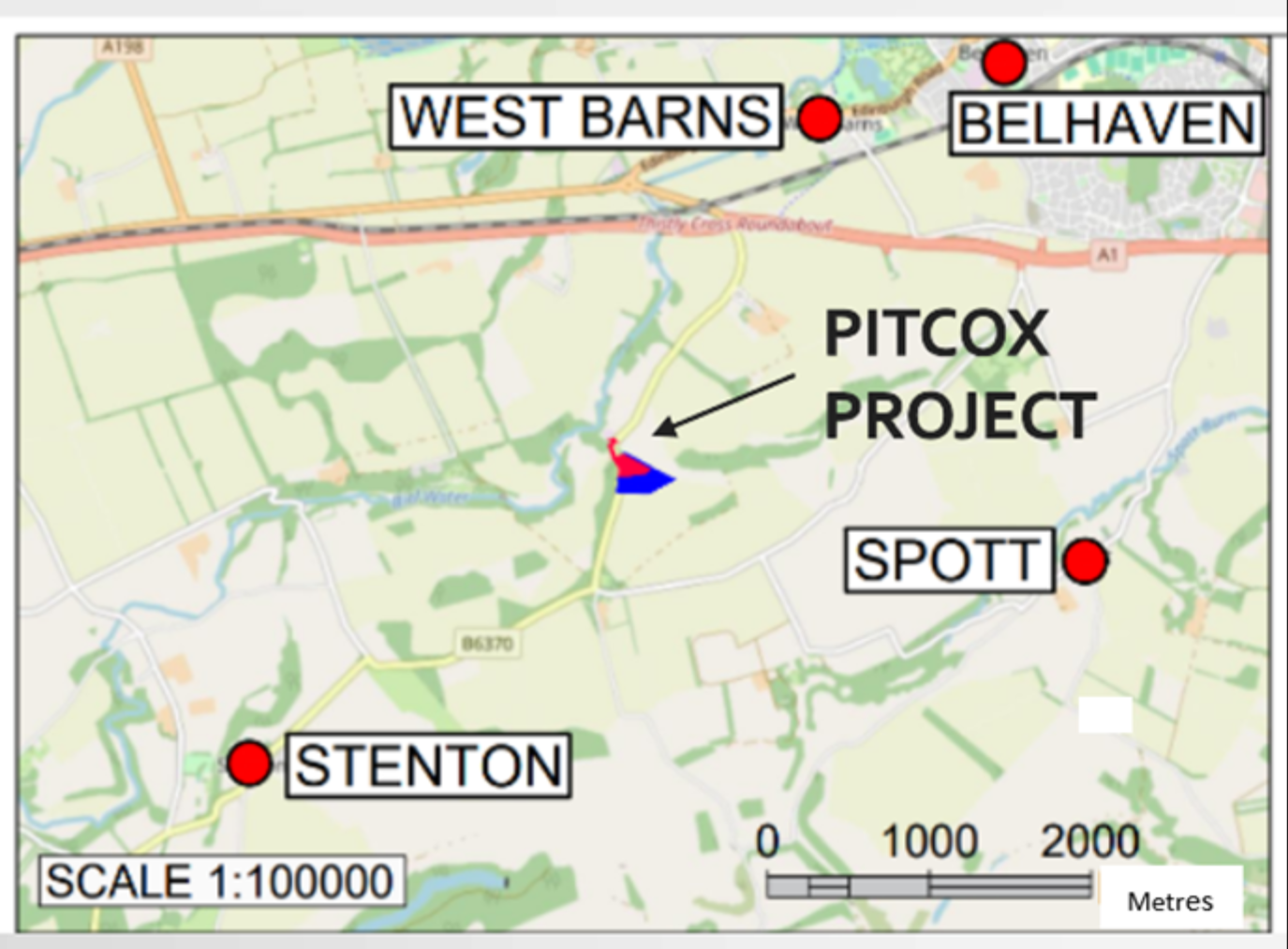
Pitcox Battery Energy Storage System (BESS) is a proposed 100MW project, located 2.5 km north of Stenton, East Lothian. The proposed development would be located on approximately four acres of land currently in arable agricultural use. The site is bordered by the B3670 to the west and is well screened by existing trees and vegetation to the north. Additional planting measures would be implemented to further reduce any impact to the landscape while increasing biodiversity
Lead Developer – Andrew Lilley
Leave Feedback developmentuk@abeienergy.com
Technology – BESS
Energy Capacity – 100 MW
Size – 4 acres
Housing – Shipping Containers
Council – East Lothian
Nearest Village – Stenton
Current Land Use – Arable Agriculture
Design
– 40 Battery Units
– 20 Power Conversion Systems
– Switching Station
– Control Room
– Auxiliary Transformer
– Internal Access Tracks
– Security Fences and Cameras
– Fire Water Tank
– Pump House
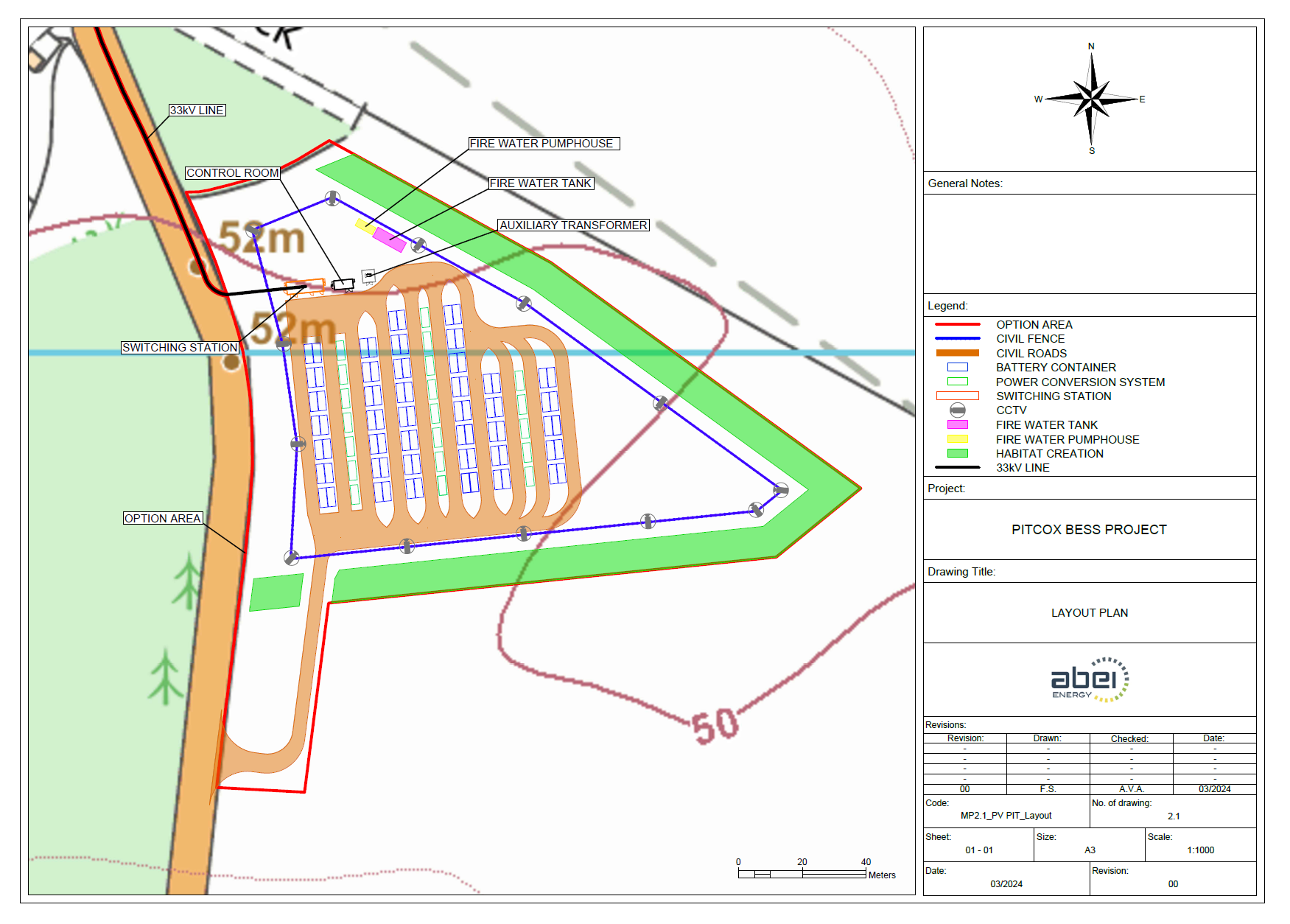
The site is bordered by the B3670 to the west and is well screened by existing trees and vegetation to the north.
PITCOX BESS
BIODIVERSITY AND LANDSCAPE PROPOSALS OVERVIEW
Design
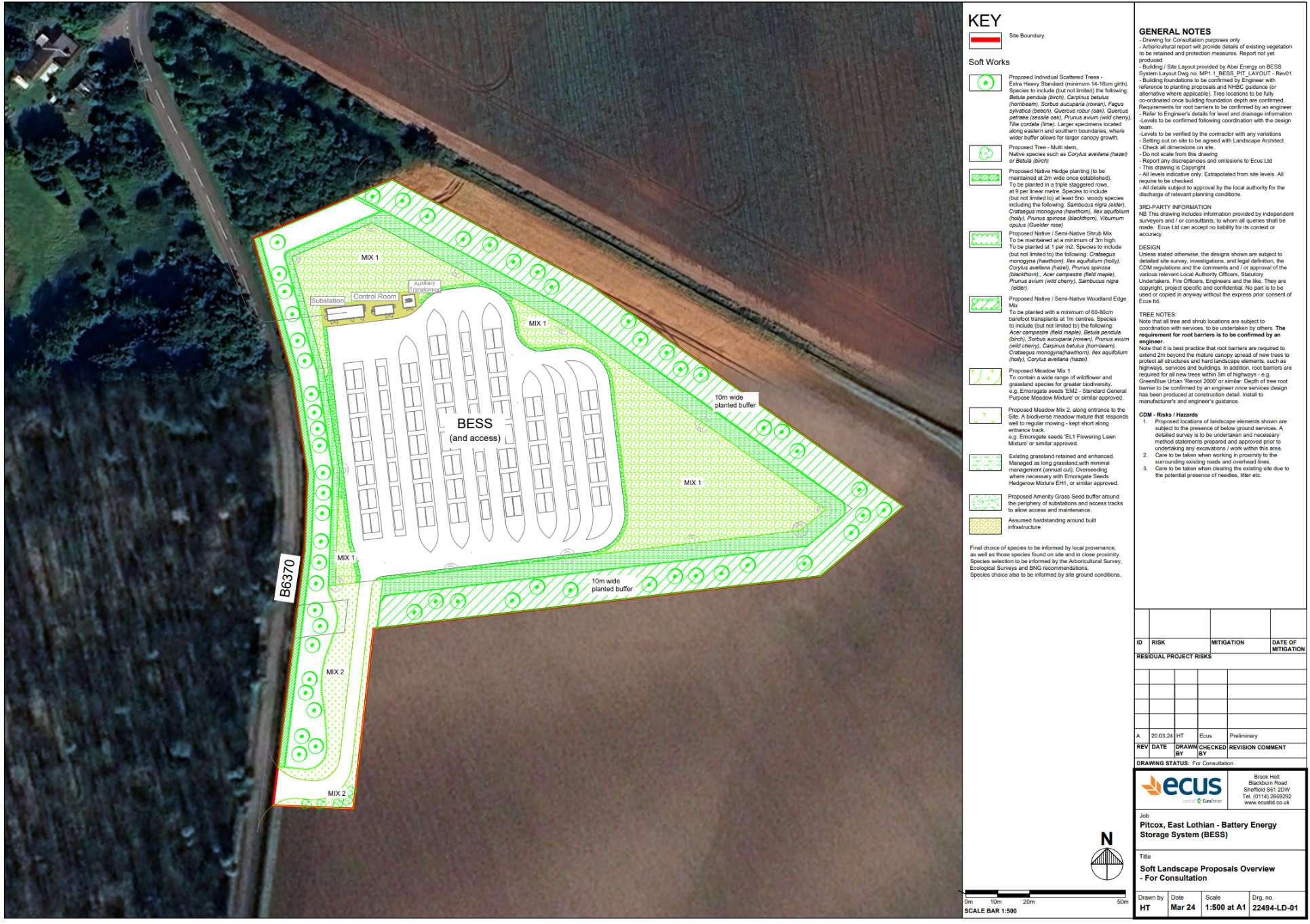
The softworks plan shows the proposed BESS layout in conjunction with planned biodiversity and landscape enhancements, which would result in a minimum of 10% biodiversity net gain.
Project Timeline
-
Environmental and Planning Surveys
December ’23 to October ’24
-
Public Drop-in Event 1
April 25th ’24 at Stenton Village Hall
-
Public Drop-in Event 2
4th September ’24, at West Barns Village Hall (15:00-20:00)
-
Planning Application Submission
Late November / Early December ’24
-
Construction
2029
-
Energisation
2030
PITCOX BESS
Consultation Material
Click below to open up a combined PDF of the material created for the public consultations for this project. Details of transport and fire management overviews can be found here.
02. YOREDALES
Site Description
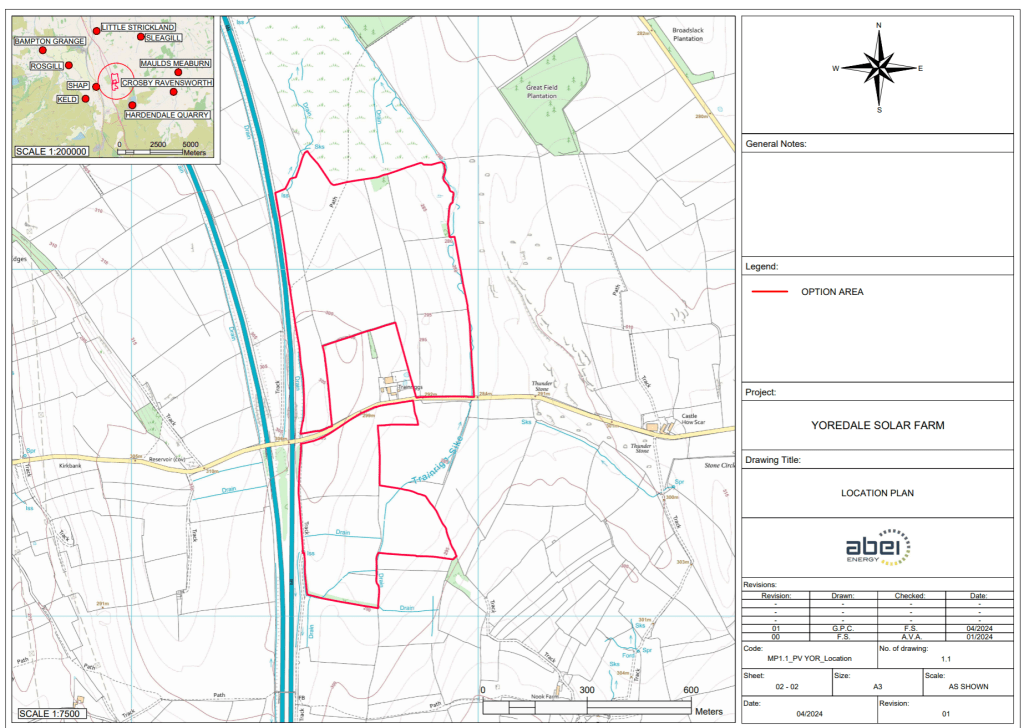
Yoredales Solar Farm is a proposed 23.5MW solar photovoltaic (PV) and 10MW Battery Energy Storage System (BESS) project, located approximately 1km east of Shap, Cumbria. The proposed development would be located on approximately 43 hectares of land currently in pastural agricultural use. The site is bordered by the M6 to the west and is well screened from Shap by the intervening landform. Additional planting measures would be implemented to further reduce any impact to the landscape while increasing onsite biodiversity.
Lead Developer – Stewart Lovesey
Technology – Solar and BESS
Energy Capacity – 23.5 and 10 MW
Size – 43 acres
BESS Housing – Shipping Containers
Council – Westmorland and Furness
Nearest Village – Shap
Current Land Use – Pastural Agriculture
Design
Solar
– 57,000 Solar PV Panels
– Support: Metal Poles
– Small Cabins: Containing Inverters and Transformers
– Room for Sheep Grazing
BESS
– 8 Containers
– Switching Station
– Security Fences and Cameras
– Fire Water Tank
– Pump House
YorEdales solar and BESS
Design
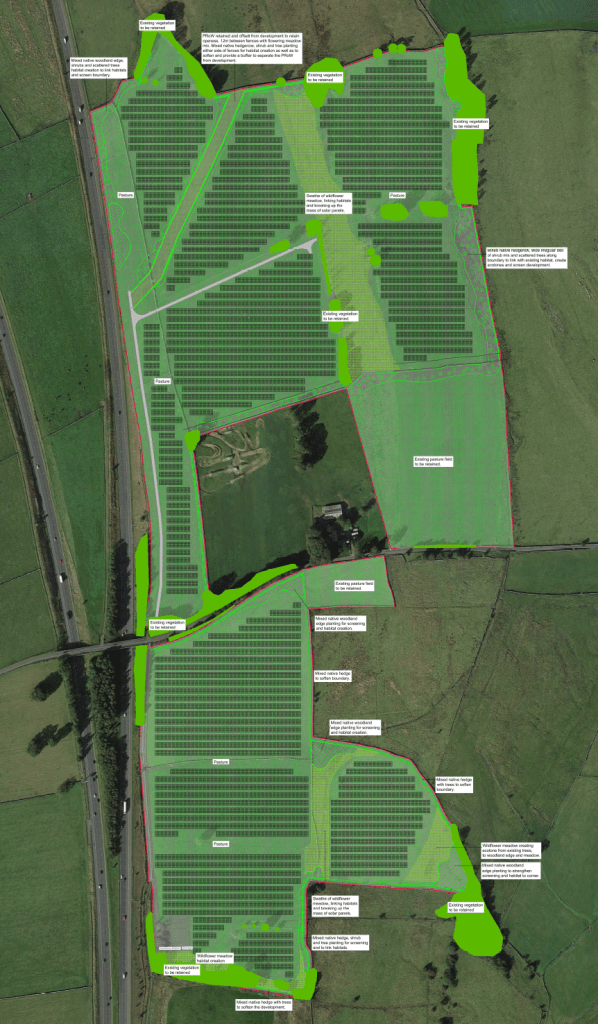
The softworks plan shows the proposed Solar and BESS layout in conjunction with planned biodiversity and landscape enhancements, which would result in a minimum of 10% biodiversity net gain.
Project Timeline
-
Environmental and Planning Surveys
November ’23 to October ’24
-
Public Drop-in Event
June 6th, ’24 at Shap Village Hall (15:00 – 20:00)
-
Planning Application Submission
Late November / Early December ’24
-
Construction
Anticipated to start earlier than 2035
-
Confirmed Energisation
Anticipated to be earlier than 2037
Yordales solar and BESS
Consultation Material
Click below to open up a combined PDF of the material created for the public consultations for this project. Details of transport and fire management overviews can be found here.
03. Woodcock
Site Description
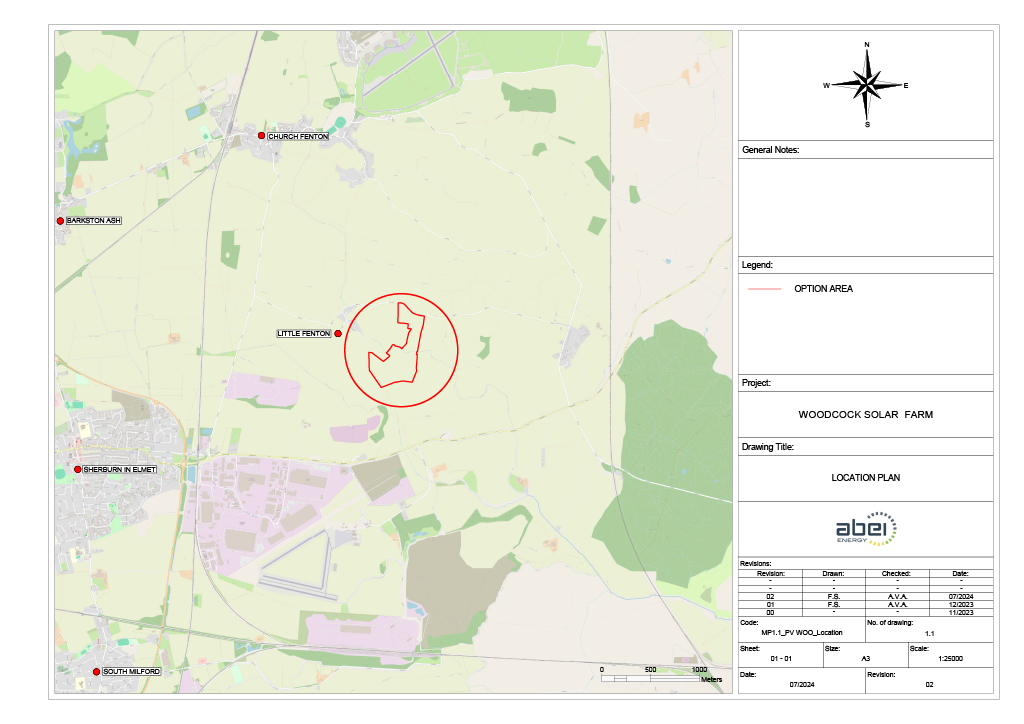
The Solar PV site (18.5MWp solar and 5MW collocated BESS) covers approximately 17.5ha of moderate grade agricultural land (Agricultural Land Classification (ALC) Grade 3) situated southeast of Little Fenton, North Yorkshire, LS25 6HQ (national grid reference SE 528349). The Site is located entirely within Little Fenton Parish, North Yorkshire. The village of Little Fenton is located approximately 340m northwest.
Lead Developer – Laurence Martin
Technology – Solar and BESS
Energy Capacity – 18.5 MWp and 5 MW
Size – 43 acres
BESS Housing – Shipping Containers
Council – North Yorkshire
Nearest Village – Little Fenton
Current Land Use – Predominantly arable, with ~1.5ha semi-improved grassland
Design
Solar
– 28,500 Solar PV Panels
– Support: Metal Poles
– Small Cabins: Containing Inverters and Transformers
– Room for Sheep Grazing
BESS
– Meteorological Station
– Switching Station
– Security Fences and Cameras
– Fire Water Tank
– Pump House
Woodcock solar and BESS
Design
The softworks plan shows the proposed Solar and BESS layout in conjunction with planned biodiversity and landscape enhancements, which would result in a minimum of 10% biodiversity net gain.

Project Timeline
-
Environmental and Planning Surveys
November ’23 to November ’24
-
Public Drop-in Event
July 23rd, ’24 at Sherburn-in-Elmet (3pm – 8pm)
-
Planning Application Submission
December ’24
-
Construction
Anticipated to start earlier than 2035
-
Confirmed Energisation
Anticipated to be earlier than 2037
Woodcock BESS
Consultation Material
Click below to open up a combined PDF of the material created for the public consultations for this project. Details of transport and fire management overviews can be found here.
04. Old Hayes’
Site Description
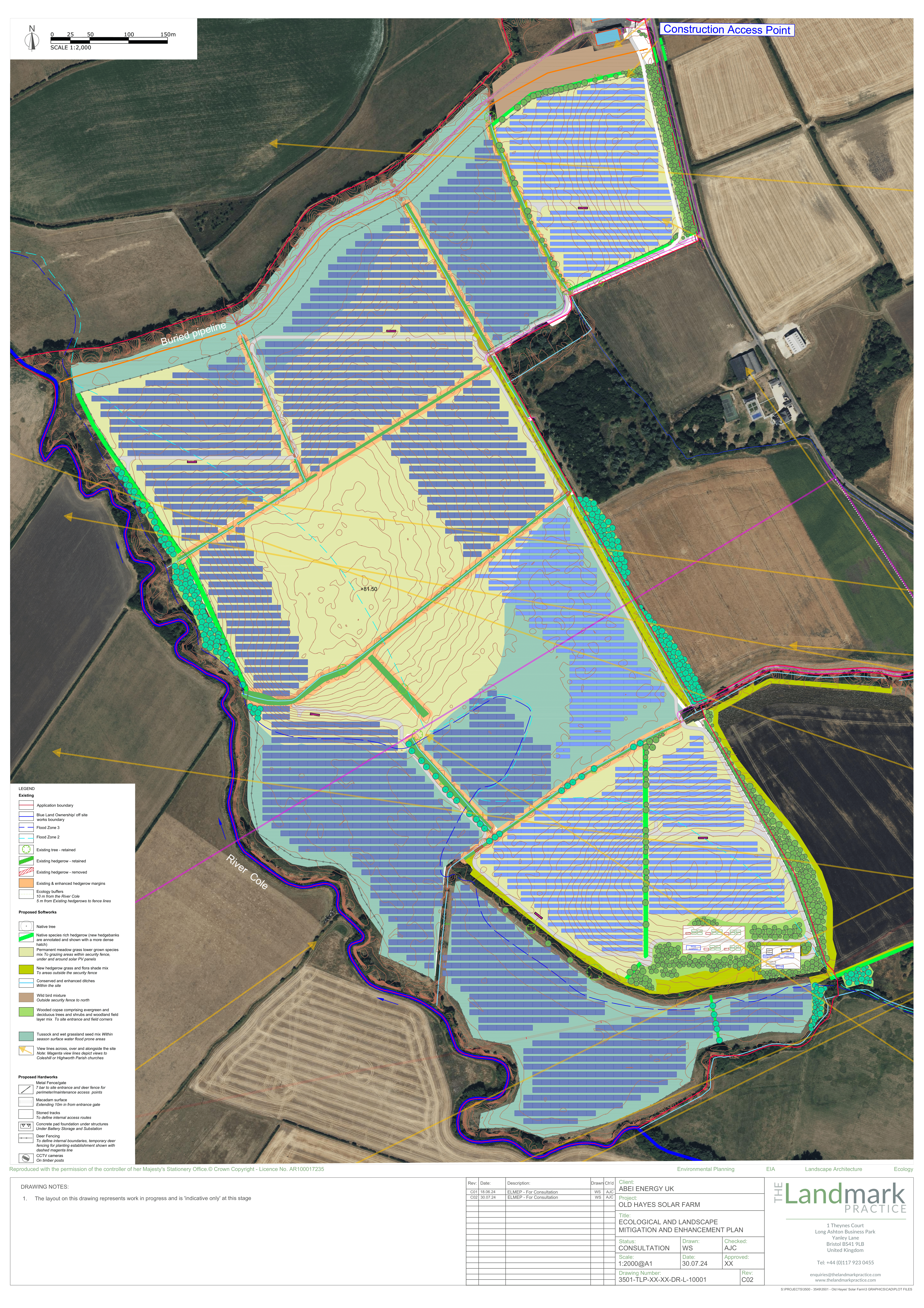
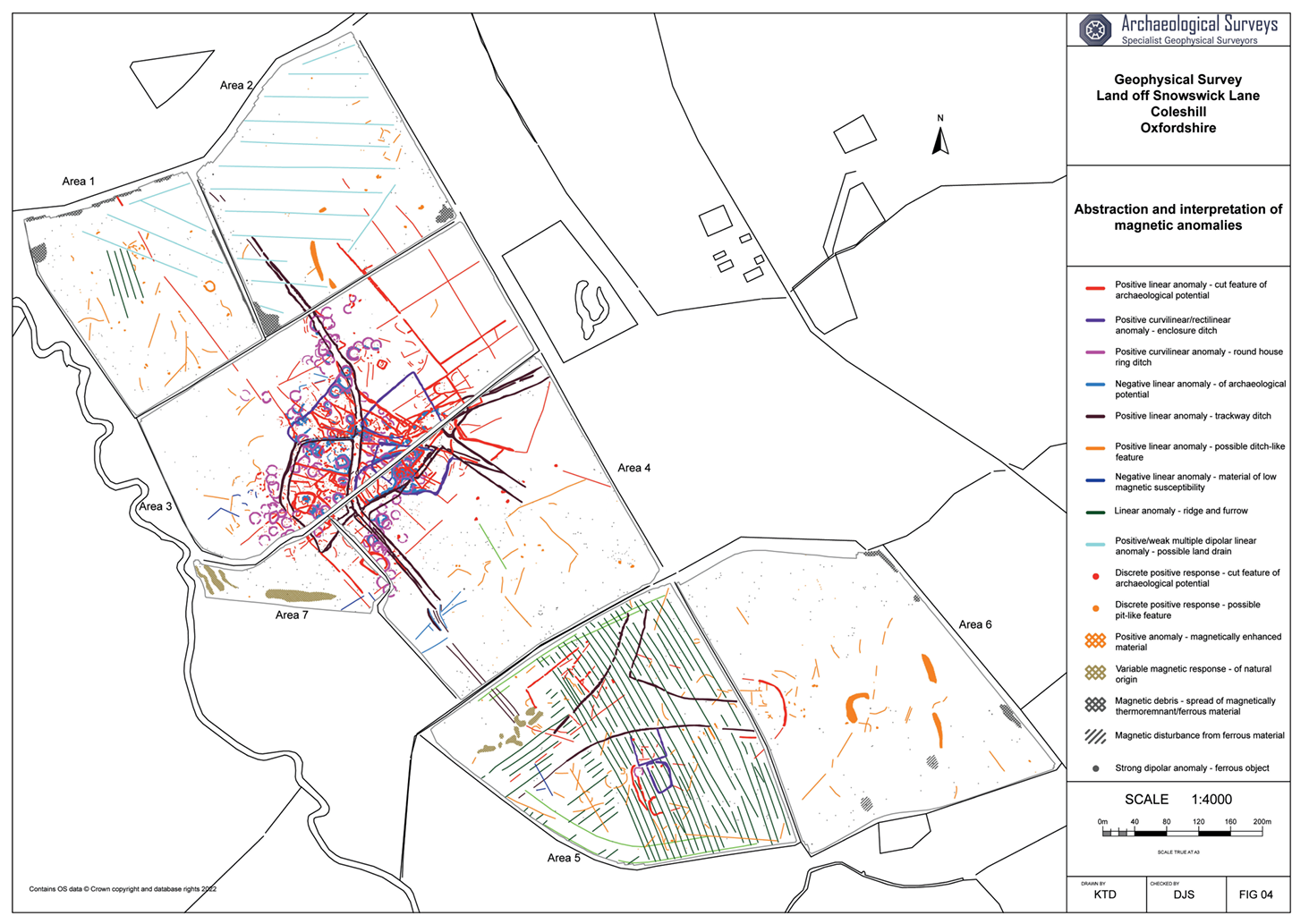
The Site covers approximately 71ha of predominantly low (Agricultural Land Classification (ALC) Grade B) and high (ALC Grade 3b) grade agricultural land. Situated approximately 500m northwest of Coleshill, Oxfordshire, SN6 7PS (national grid reference SU 225942). The Site is located entirely within Coleshill Parish, Oxfordshire.

Lead Developer – Stewart Lovesey
Technology – Solar and BESS
Energy Capacity – 41 and 25 MW
Size – 175 acres
BESS Housing – Shipping Containers
Council – Vale of White Horse
Nearest Village – Coleshill
Current Land Use – Entirely Arable
Design
Solar
– 93,000 Solar PV Panels
– Support: Metal Poles
– Small Cabins: Containing Inverters and Transformers
– Room for Sheep Grazing
BESS
– 20 Containers
– Switching Station
– Security Fences and Cameras
– Meteorological Station
– Fire Water Tank
– Pump House
Old Hayes’ solar and BESS
Design
The softworks plan shows the proposed Solar and BESS layout in conjunction with planned biodiversity and landscape enhancements, which would result in a minimum of 10% biodiversity net gain.
Project Timeline
-
Commencement of Environmental Surveys
February ’24
-
Public Drop-in Event
September ’24
-
Environmental Surverys Completed & Pre-Application Design Freeze
October ’24
-
Planning Application Submission
December ’24
OLD Hayes’ solar and BESS
Consultation Material
Click below to open up a combined PDF of the material created for the public consultations for this project. Details of transport and fire management overviews can be found here.
05. Piper Lane
Site Description
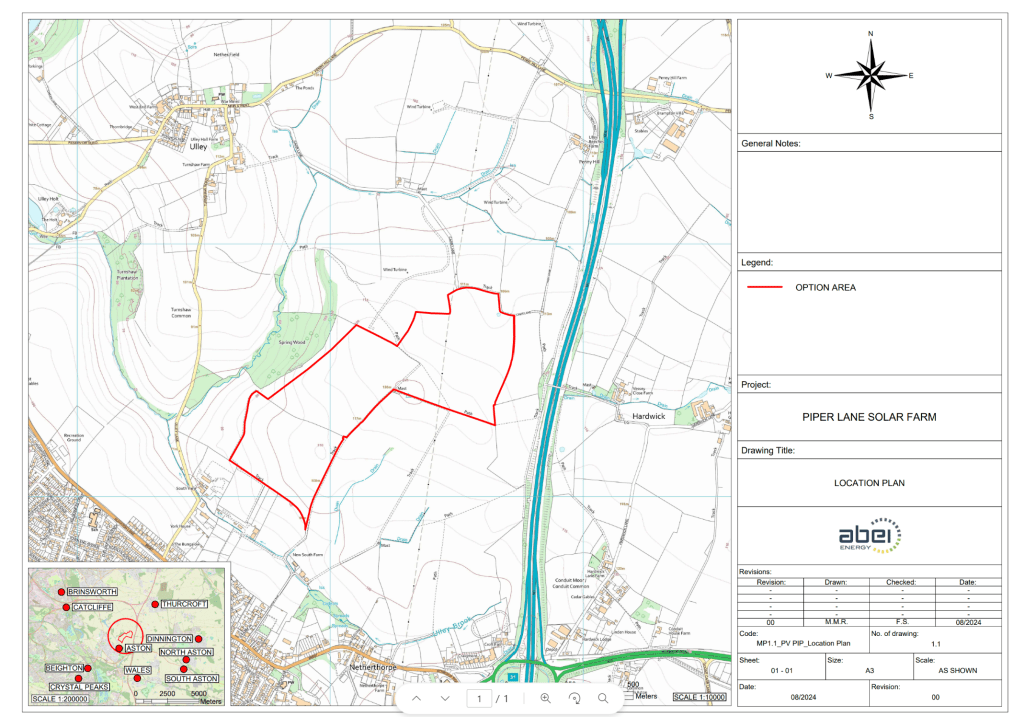
The site is located approximately 350m north east of Aston, near Rotherham, South Yorkshire. The Proposed Development would be located on approximately 41.5 hectares of land currently in predominantly arable agricultural use (Agricultural Land Classification (ALC) Grade 3).
Lead Developer – Laurence Martin
Technology – Solar and BESS
Energy Capacity – 31.3 MW Solar and 12 MW BESS
Size – 41.5 hectares
BESS Housing – Shipping Containers
Council – Rotherham Metropolitan Borough Council
Nearest Village – Aston
Current Land Use – Arable Agricultural Use
Design
Solar
– 72,600 Solar PV Panels
– Support: Metal Poles
– Small Cabins: Containing Inverters and Transformers
– Room for Sheep Grazing
BESS
– 8 Containers
– Switching Station
– Security Fences and Cameras
– Meteorological Station
– Fire Water Tank
– Pump House
Piper Lane solar and BESS
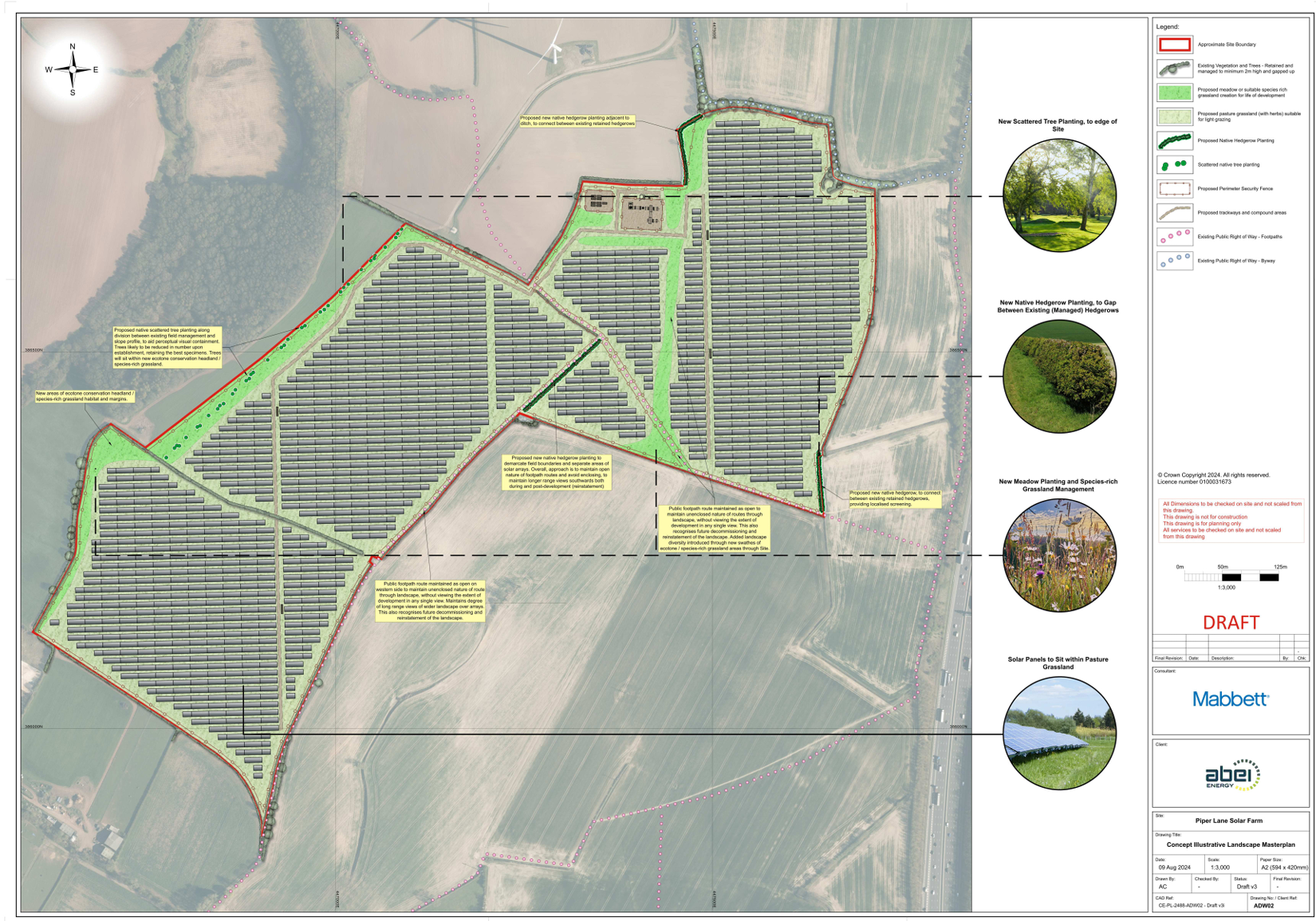
Design
The softworks plan shows the proposed Solar and BESS layout in conjunction with planned biodiversity and landscape enhancements, which would result in a minimum of 10% biodiversity net gain.
Project Timeline
-
Commencement of Environmental Surveys
November ’23
-
Public Drop-in Event
10th September ’24
-
Environmental Surverys Completed & Pre-Application Design Freeze
October ’24
-
Planning Application Submission
December ’28
Piper lane solar and BESS
Consultation Material
Click below to open up a combined PDF of the material created for the public consultations for this project. Details of transport and fire management overviews can be found here.
06. Snapewood
Site Description
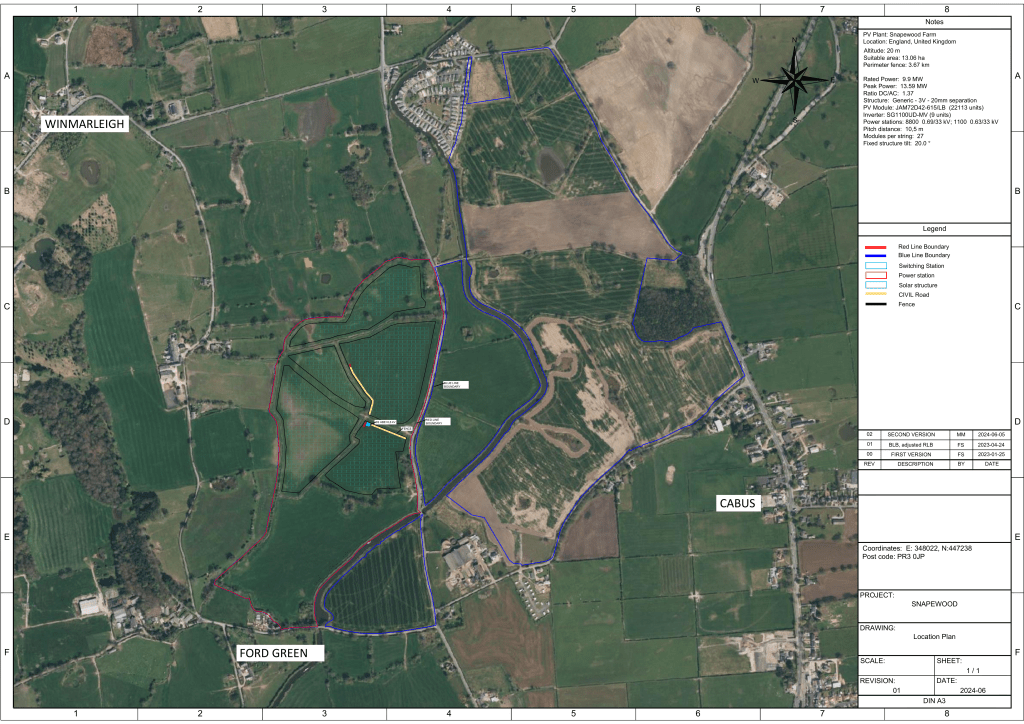
Snapewood Solar Farm is a proposed 9.9 megawatt (MW) solar photovoltaic (PV) project, located approximately 1km northwest of Garstang, Lancashire. The Proposed Development would be located on approximately 17.3 hectares of land currently in predominantly pastural agricultural use.
Lead Developer – Laurence Martin
Technology – Solar PV
Energy Capacity – 9.9 MW Solar
Size – 17.5 hectares
Council – Wyre Borough Council
Nearest Village – Cabus & Winmarleigh
Current Land Use – Predominantly grazing agricultural
Design
Solar
– 21,762 PV modules
– Support: Metal Poles
– Small Cabins: Containing Inverters and Transformers
– Room for Sheep Grazing
Snapewood solar
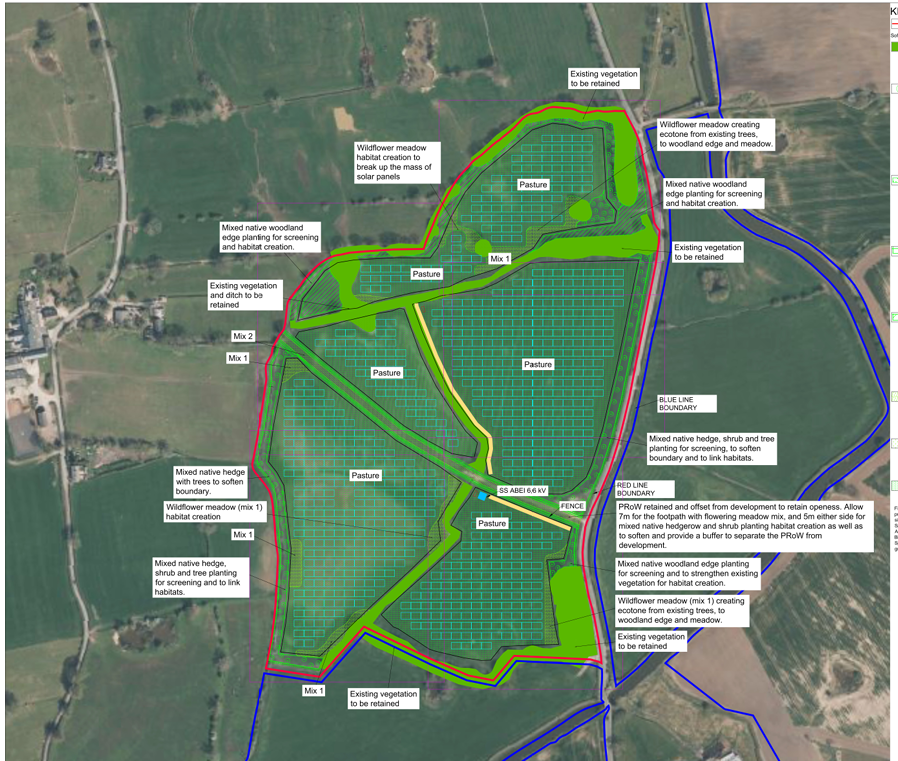
Design
The softworks plan shows the proposed Solar layout in conjunction with planned biodiversity and landscape enhancements, which would result in a minimum of 10% biodiversity net gain.
Project Timeline
-
Commencement of Environmental Surveys
March ’24
-
Public Drop-in Event
28th October ’24
15:00 – 20:00
-
Environmental Surverys Completed & Pre-Application Design Freeze
January ’25
-
Planning Application Submission
March ’25
07. 17 Acres
Site Description
17 Acres is a 100MW Battery Energy Storage project located near Tealing, approx. 4 miles north of the City of Dundee. The proposed development is situated on lands immediately north of Tealing Sub Station. The site comprises undeveloped agricultural land currently used for the grazing of livestock. The development will extend to approx: 2.6Ha. The site is located within the Angus Council Area however given this is a 100mw BESS project, planning will be requested via a planning submission to the Energy Consents Unit.

Lead Developer – Charlie Milarvie
Technology – BESS
Energy Capacity – 100 MW BESS
Size – 2.6 hectares
Council – Angus Council
Nearest Village – Tealing
Current Land Use – Undeveloped agricultural land used for grazing of livestock
Design
BESS
– 1 Substation
– 84 Battery Units
– 21 Power Stations
– Control Room
– Auxiliary Transformer
– Internal Access Tracks
– Security Fences and Cameras
17 Acres BESs
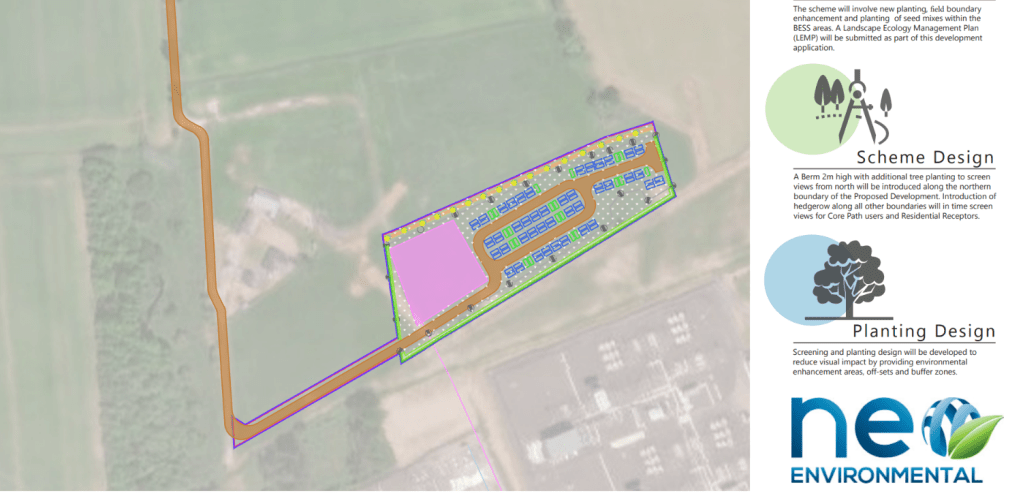
Design
The softworks plan shows the proposed Solar and BESS layout in conjunction with planned biodiversity and landscape enhancements, which would result in a minimum of 10% biodiversity net gain.
Project Timeline
-
Commencement of Environmental Surveys
11th April ’24
-
First Public Drop-in Event
23rd January ’25
15:00 – 20:00 at Tealing Hall, Hall Road, Dundee DD4 0QW
-
Second Public Drop-in Event
TBC
-
Planning Application Submission
End February ’25
-
Anticipated Energisation Date
2032
08. Juniper Farm
Site Description
Juniper Solar Farm is a proposed 17.6-megawatt (MW) solar photovoltaic (PV) project, located north of Weeton, North Yorkshire. The Proposed Development would be located on approximately 35.2 hectares of land currently in predominantly pastural agricultural use.

Lead Developer – Laurence Martin
Technology – Solar PV and BESS
Energy Capacity – 17.6 MW Solar and 3.58 BESS
Size – 35.2 hectares
Council – North Yorkshire Council
Nearest Village – Weeton
Current Land Use – Predominantly grazing agricultural
Design
Solar
– 38,097PV modules
– Support: Metal Poles
– Small Cabins: Containing Inverters and Transformers
– Room for Sheep Grazing
Juniper Farm solar and bess
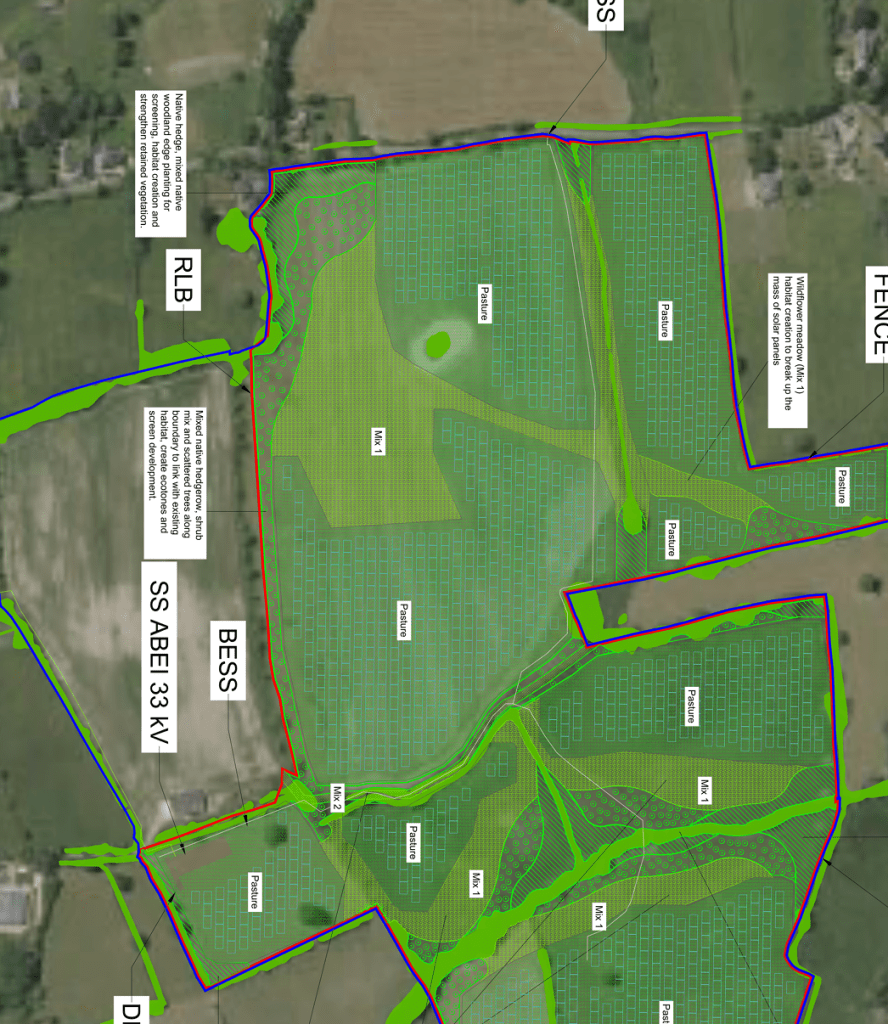
Design
Habitat enhancement measures, such as wildflower meadow creation and hedgerow reinforcement, will be implemented as part of the Proposed Development. It is anticipated that these will result in a substantial overall on-site Biodiversity Net Gain.’
Project Timeline
-
Commencement of Environmental Surveys
March ’24
-
Public Drop-in Event
20th February ’25
St Barnabus Church, Gallogate Lane, Weeton, Leeds, West Yorkshire, LS17 0AU
15:00 – 20:00
-
Environmental Surverys Completed & Pre-Application Design Freeze
March ’25
-
Planning Application Submission
April ’25
09. Boyah Grange
Site Description
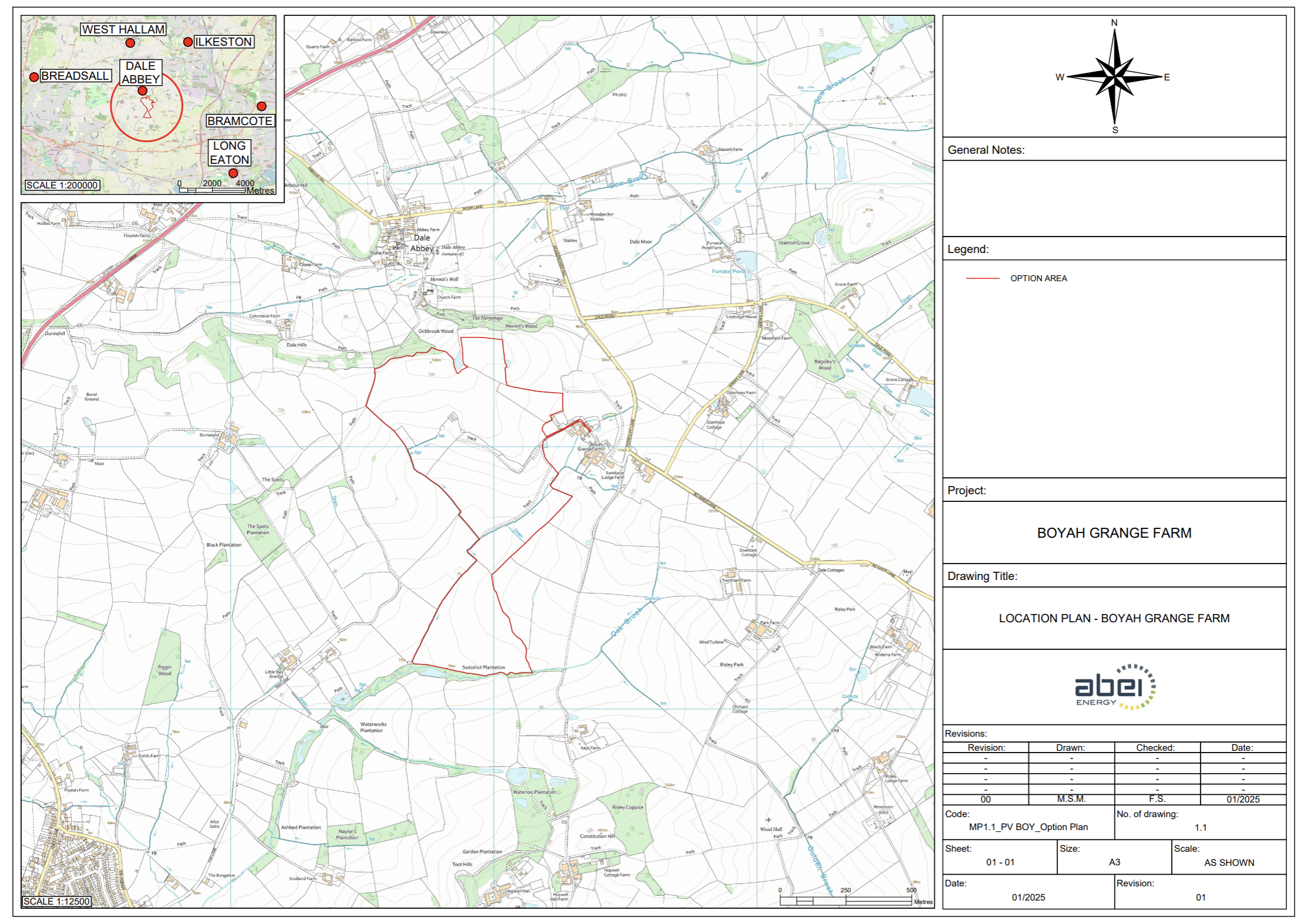
Boyah Grange Solar Farm is a proposed 35.2-megawatt (MW) solar photovoltaic (PV) project, located south of Dale Abbey, in the borough of Erewash in Derbyshire. The Proposed Development would be located on approximately 49 hectares of land currently in predominantly pastural agricultural use.
Lead Developer – Laurence Martin
Leave Feedback developmentuk@abeienergy.com
Lead Developer – Laurence Martin
Technology – Solar PV
Energy Capacity – 35.2 MW Solar
Size – 49 hectares
Council – Erewash Council
Nearest Village – Dale Abey
Current Land Use – Predominantly grazing agricultural
Design
Solar
– 76,194PV modules
– Support: Metal Poles
– Small Cabins: Containing Inverters and Transformers
– Room for Sheep Grazing
boyah grange solar
Design
Habitat enhancement measures, such as wildflower meadow creation and hedgerow reinforcement, will be implemented as part of the Proposed Development. It is anticipated that these will result in a substantial overall on-site Biodiversity Net Gain.’

Project Timeline
-
Commencement of Environmental Surveys
March ’24
-
Public Drop-in Event
26th February ’25
The Gateway Centre, 1 The Stackyard, Dale Abbey, Ilkeston DE7 4PN
15:00 – 20:00
-
Environmental Surverys Completed & Pre-Application Design Freeze
April ’25
-
Planning Application Submission
May ’25
sustainability in practice
Biodiversity and Landscape:
Habitat Creation
Our projects are well screened by hedgerows and scattered trees. Between the security fence and screening measures, we have designated an area of enhanced long grassland, which would provide habitats for a wide diversity of key invertebrate species.
Grassland Soils
Additionally, grassland soils can be as effective as trees at storing carbon from the atmosphere. Within the security fenced area, we plan on introducing two meadow mixes, containing additional grassland and a variety of wildflowers.
Ongoing Benefits
Wildflowers are of great benefit to biodiversity as they produce food for key pollinators, such as bees and butterflies and other invertebrates, which in turn feed species higher up the food chain.